Australian Backyard Bird Identification Guide: Who’s That in Your Garden?

You glance out the window and see a flash of colour in the gum tree. Red? Blue? Green? Is it a parrot, a honeyeater, or something else entirely? For many Australians, the first step in falling in love with backyard birds is simply figuring out who’s who.
This guide is your starting point. We’ll focus on the “Big Four” backyard parrots you’re most likely to see, plus a few other common visitors. By the end, you’ll not only identify your guests but understand their unique personalities—because in the bird world, appearance tells only half the story. So go and get your camera!
Related Posts
-
Australian Parrot Intelligence Compared: Who’s the Smartest? Australian Parrot Intelligence Showdown: Cockatoos vs Lorikeets vs Rosellas vs King Parrots 🏆 THE INTELLIGENCE CHAMPIONSHIP TABLE Intelligence…
🎯 The Quick Identification Method
Ask yourself three questions:
-
What’s the MAIN colour? (Red, green, rainbow, white, or brown?)
-
How BIG is it? (Small as a fist, medium like a mug, or large like a shoe?)
-
What’s it DOING? (Hanging upside down, feeding on ground, screaming loudly?)
Example: “Large red-and-green bird quietly eating seeds on the ground” → King Parrot
📊 The “Big Four” Backyard Parrots: Your Most Likely Visitors
1. Australian King Parrot: The Gentle Giant
-
Size: Large (41-43cm) – about football length
-
Males: Brilliant scarlet red head, chest, belly; dark green back/wings

-
Females: Grassy green overall with red belly; green head
-
Juveniles: Look like females but with brown eyes (adults have yellow)
-
Behaviour: Quiet, cautious, ground feeders, often in pairs
-
Sound: Soft whistles (“weet-weet” or “chi-wee”)
-
When: Winter visitor to gardens (summers in highlands)
-
Personality: The quiet, watchful strategist
2. Crimson Rosella: The Shy Beauty
-
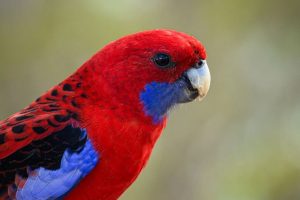 Size: Medium (32-36cm) – slightly smaller than king parrot
 -
Adults: Crimson/red body with bright blue cheek patches; black back with red scalloping
-
Juveniles: Olive green with red forehead (look completely different!)
-
Behaviour: Shy, ground feeders, easily startled
-
Sound: Soft, musical “chwit-chwit” calls
-
When: Year-round but unpredictable
-
Personality: The cautious artist who flees at loud noises
3. Rainbow Lorikeet: The Loud Acrobat
-
Size: Small-medium (25-30cm) – compact and stocky

-
Colours: Rainbow explosion – blue head, green wings, orange/yellow chest
-
Key Feature: Short black brush-tipped beak (for nectar)
-
Behaviour: Noisy, aggressive, acrobatic, hangs upside down
-
Sound: Constant loud screeching and chattering
-
When: Year-round, especially at nectar feeders
-
Personality: The rowdy teenager who dominates the party
4. Sulphur-crested Cockatoo: The Intelligent Destroyer
-
 Size: Very large (44-55cm) – impossible to miss
 -
Colour: White with bright yellow crest (raises when excited)
-
Key Features: Massive black beak, yellow under wings/tail
-
Behaviour: Loud, destructive, intelligent, forms large flocks
-
Sound: Iconic raucous screech (especially at dawn/dusk)
-
When: Year-round, often in noisy gangs
-
Personality: The smart rebel who chews your decking for fun
🎨 Visual Identification Flowchart
Start → Is it making deafening noise?
├── YES → Is it mostly WHITE with yellow crest?
│   ├── YES → SULPHUR-CRESTED COCKATOO
│   └── NO → Is it rainbow-coloured with black beak?
│       ├── YES → RAINBOW LORIKEET
│       └── NO → [Other noisy bird - magpie, currawong]
└── NO → What's the main colour?
    ├── RED & GREEN → Is it LARGE and quiet?
    │   ├── YES → KING PARROT
    │   └── NO → Is it medium with blue cheeks?
    │       ├── YES → CRIMSON ROSELLA
    │       └── NO → [Other red bird - red-browed finch]
    ├── Mostly GREEN → Could be female king parrot or juvenile rosella
    └── BROWN/GREY → [Other common birds - see below]
🐦 Other Common Backyard Visitors
Magpies & Currawongs (The Black & White Gang)
-
Australian Magpie: Black and white, melodious carolling, swoops in spring
-
Pied Currawong: Black with white tail tips, yellow eyes, haunting “curra-wong” call
Honeyeaters (The Nectar Sippers)
-
Noisy Miner: Grey with yellow beak/legs, aggressive to other birds
-
Red Wattlebird: Brown with red wattles, loud “chok-chok” call
Small Birds (The Ground Crew)
-
Willie Wagtail: Black and white, constantly wagging tail
-
Superb Fairy-wren: Tiny, males bright blue in breeding season
🔍 Common Identification Challenges Solved
“Is it a king parrot or a rosella?“
-
King parrot: LARGER, quieter, male is all red front
-
Crimson rosella: Smaller, blue cheeks, black back with red spots
“Is it a lorikeet or a rosella?”
-
Lorikeet: RAINBOW colours, black brush beak, LOUD
-
Rosella: Block colours (red/blue/green), pale pointed beak, quiet
“Juvenile vs Female Confusion”
-
Female king parrot: Green with red belly, yellow eyes
-
Juvenile crimson rosella: Green with red forehead, brown eyes
-
Trick: Check the eyes and look for parents nearby
🏡 Where to Spot Them in Your Garden
| Bird | Favorite Spot | Feeding Style | Time of Day |
|---|---|---|---|
| King Parrot | Ground under feeders | Seed picker | Early morning, dusk |
| Rosella | Low branches, ground | Seed specialist | Mid-morning, afternoon |
| Lorikeet | Flowering gums, nectar feeders | Acrobatic nectar drinker | All day (loudest!) |
| Cockatoo | Deck rails, roof edges | Destructive forager | Dawn, dusk, when chewing |
| Magpie | Lawn, open ground | Insect hunter | Morning, late afternoon |
Learn how each Australian parrot compares in intelligence.
📸 Photography Tips for Identification
-
Note the beak shape (most telling feature)
-
Record the sound (even on your phone)
-
Observe behaviour for 60 seconds
-
Check size comparison (against familiar objects)
-
Look for distinguishing marks (cheek patches, crest, eye colour)
❓ “I Still Can’t Identify It!” – Next Steps
-
Take a photo (even blurry helps)
-
Note your location (state, urban/bush)
-
Describe the behaviour and sounds
-
Check time of year (some birds seasonal)
-
Use our specific guides:
-
King Parrot Identification Guide (male vs female, juveniles)
-
Crimson vs Eastern Rosella (telling rosellas apart)
-
Lorikeet Species Guide (rainbow vs scaly-breasted)
-
Cockatoo Identification (sulphur-crested vs corella)
-
🌿 Why Identification Matters

Knowing who visits your garden isn’t just about labels—it’s about understanding relationships. When you recognize that:
-
The quiet red bird is a king parrot who trusts your space
-
The shy blue-cheeked visitor is a rosella who’s easily scared
-
The noisy rainbow acrobat is a lorikeet who’ll bully others
-
The large white screamer is a cockatoo who might eat your house
…you’re not just identifying birds. You’re reading the social dynamics of your backyard ecosystem.
📚 Deep Dive Identification Guides
Ready to become an expert? Explore our complete guides:
Parrot Identification Series:
Behaviour & Habitats:
🎯 Your New Superpower
Tomorrow when that flash of colour appears, you won’t just think “bird.” You’ll think: “Ah, a female king parrot—early for the season, must be a mild winter. She’s eyeing the sunflower seeds but waiting for the lorikeets to leave first.”
Welcome to the world of backyard birding. The first step is knowing who’s who. The next step—understanding their stories—is where the real magic begins. Would you like to know if you can keep native Australian birds as pets?
Still unsure? Share your description in our comments or check our Complete Australian Bird Directory.