Do Lorikeets Remember Humans? The Science of Avian Recognition
 After a few visits, the bold rainbow lorikeet at your feeder seems to look right at you. It might even approach more readily when you’re the one who refills the nectar. This leads to the fascinating question: Do lorikeets actually remember us as individuals?
The short answer is yes, almost certainly. While we can’t climb inside a lorikeet’s brain, scientific research on parrot cognition combined with overwhelming anecdotal evidence from handlers and bird lovers suggests these intelligent birds are capable of recognising and remembering individual humans over extended periods.
Related Posts
-
Can Lorikeets Eat Fruit? The Safe List (Yes & No) Can Lorikeets Eat Fruit? A Guide to Safe & Unsafe Fruits Yes, Rainbow Lorikeets can and do eat fruit,…
-
Hand-Feeding Lorikeets: Weighing the Pros & Cons Hand-Feeding Lorikeets: Weighing the Pros, Cons & Crucial Ethics The image of a Rainbow Lorikeet perched confidently on…
-
Australian Lorikeet Identification Guide: Rainbow Or What? How to Identify Australian Lorikeets: A Guide to Rainbow, Scaly-breasted & More Introduction: A Flash of Confusing Colour…
-
Attract Rainbow Lorikeets: Ethical Guide with Plants & Safe Food How to Attract Rainbow Lorikeets to Your Garden (The Right Way) A Living Rainbow in Your Garden The…
-
How Intelligent Are Lorikeets? Quite Amazing. Lorikeet Intelligence: Clever Tricks, Problem-Solving & Memory Tests 🧠 THE LORIKEET INTELLIGENCE REPORT CARD Intelligence Type Rating (1-10) Comparison…
This guide explores the how and why behind lorikeet memory and what it means for your backyard interactions.
🧠 The Evidence: How We Know Parrots Remember
Lorikeets are parrots, and parrots possess remarkable cognitive abilities. Studies on larger parrots like African Greys and Cockatoos provide the framework:
-
Advanced Neostriatum: Parrots have a large, complex brain region (the neostriatum) associated with learning, problem-solving, and memory—comparable to primates.
You Might Also Like
-
Rainbow Lorikeet Diet: Natural Food & Safe Backyard Feeding The Rainbow Lorikeet Diet: What They Eat in the Wild vs. Your Backyard More Than Just Pretty Feathers…
-
Are Lorikeets Aggressive? The Truth About Their Territorial Nature Are Lorikeets Aggressive? Understanding Their Feisty Social World Chaos at the Feeder A rainbow lorikeet feeding station often…
-
Safe Sugar Water for Lorikeets: The Right Recipe How to Make Safe Sugar Water for Lorikeets: The Correct Recipe Rainbow lorikeets are spectacular visitors that bring…
-
-
Long-Term Social Memory: In the wild, parrots live in complex flocks where recognising friends, rivals, and family is crucial for survival. This ability translates to recognising humans in their “flock.”
-
Anecdotal Proof: Wildlife rehabilitators consistently report that lorikeets they have cared for and released react differently to them years later compared to strangers—often calling or approaching without fear.
👁️ How Lorikeets Recognise You: The Three Cues
They don’t just remember a “human shape.” They use specific identifiers:
| Recognition Cue | How It Works | Your Example |
|---|---|---|
| Visual Appearance | They notice unique combinations: your height, hair colour, posture, and especially clothing. A distinctive hat or shirt can trigger immediate recognition. | They may come closer if you wear the same gardening jacket you always wear while filling the feeder. |
| Vocal Sound | They can distinguish your specific voice from others. The tone, pitch, and cadence of you calling “hello” becomes a familiar, non-threatening sound. | They may respond to your unique whistle or greeting when you step outside. |
| Behavioural Patterns | They learn and remember routines and associations. You = the person who brings food, moves slowly, and doesn’t make threatening gestures. | They arrive at the time of day you usually refill the feeder, anticipating your actions. |
Deep Dive: This intelligence is part of their complex social world. Learn more in our guide on Lorikeet Behaviour & Communication.
[Menu:lorikeet]
⏳ How Long Do They Remember?
There is no definitive timeline for a lorikeet’s memory, but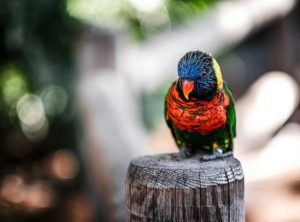 evidence suggests it’s long-term—potentially months or even years.
-
Seasonal Remembering: If you feed them throughout winter and stop in summer, they will likely still recognise you and investigate when you reappear the following autumn.
-
Negative Memories Are Strong: They are especially good at remembering negative experiences (e.g., being chased by a specific person, a loud noise you made). This is a survival instinct. A single scare can make them wary of you for a long time.
-
Positive Associations Persist: Consistent, gentle, and rewarding interactions build a positive memory that also lasts.
🤝 What This Means for Your Backyard Relationship
Knowing they can remember you changes the dynamic from “feeding wildlife” to building a long-term, interspecies rapport.
-
Consistency is Key: Be predictable in your actions and appearance to strengthen their positive memory.
-
Your Reputation Precedes You: If you are always the calm, food-providing figure, new lorikeets in the flock may learn from others that you are safe—a form of social learning.
-
Patience After Absence: If you go on holiday or stop feeding for a while, don’t be discouraged if they seem wary at first. Give them time to reactivate the memory of you.
🆚 Lorikeet Memory vs. Other Backyard Birds
| Bird | Likely Memory Capacity | Key Difference |
|---|---|---|
| Rainbow Lorikeet | High. Social, intelligent, and interactive. | Remembers individuals based on detailed cues. Highly food-motivated, which strengthens association. |
| Sulphur-Crested Cockatoo | Exceptionally High. Among the smartest of all birds. | Remembers not just people, but complex problem-solving solutions (e.g., how to open a bin latch). |
| Rosella | Moderate. More likely to remember a location or routine than a specific human face. | Shy nature means they keep their distance, limiting detailed individual recognition. |
| Australian Magpie | Very High. Famous for remembering individual humans for years, both positively and negatively (swooping). | Memory is deeply tied to territorial defence. |
❓ Frequently Asked Questions
Q: Can my lorikeets tell me apart from my family members?
A: Very likely, yes. If different family members interact with them differently (one feeds, one chases, one ignores), they will learn these distinctions and behave accordingly.
Q: If I move house, will the lorikeets remember me if I visit my old garden?
A: It’s possible, especially if you were a primary feature of that garden for a long time. However, their strongest association is with the location. They are more likely to remember you in the specific context of your old backyard.
Q: Does hand-feeding improve their memory of me?
A: Yes, dramatically. Close, positive interaction creates a much stronger and more detailed memory than just being a distant figure who fills a feeder.
Q: Is this memory proof of “affection” or “love”?
A: We must be careful with human terms. It is proof of recognition, association, and trust. In the bird’s world, you are a reliable, non-threatening part of its environment that provides a valuable resource. This is a significant and meaningful relationship from their perspective.
📚 Explore Lorikeet Intelligence Further
-
Are Lorikeets Aggressive? – Understanding their social dominance.
-
Lorikeet Communication & Calls – How they interact with their flock.
-
Hand-Feeding Lorikeets: Pros & Cons – The ethics and impact of close interaction.
The bond you build is real. Return to our Australian Backyard Birds homepage for more insights into the minds of your backyard visitors.