🦜 “Common Parrots in Australian Backyards: Your 4 Regular Visitors”
Common Parrots in Australian Backyards: Your 4 Regular Visitors
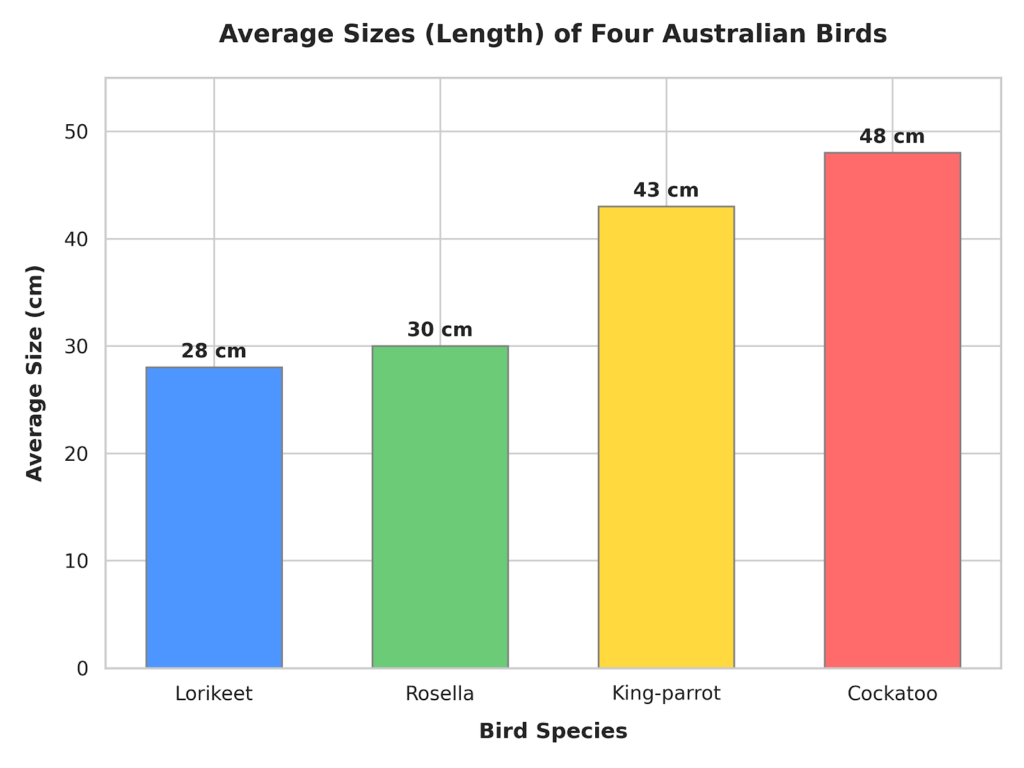 Quick Answer: Four parrot species dominate Australian backyards: Rainbow Lorikeets (colourful nectar-lovers), Sulphur-Crested Cockatoos (intelligent loud chewers), King Parrots (gentle seed-eaters), and Rosellas (quiet ground-foragers). Despite their differences, they’re all members of the parrot family visiting gardens from Queensland to Victoria.
If you’re watching birds in your Australian garden(get your camera!), chances are you’re seeing parrots – even if you don’t realise it.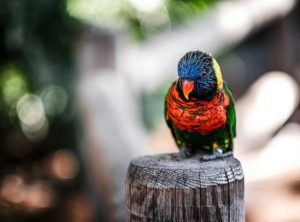 Many Australians encounter these colourful birds daily without recognising they’re all part of Australia’s diverse parrot family. From the bold lorikeets dominating your feeder to the shy rosellas foraging at dusk, understanding these four common visitors helps you appreciate their unique roles in your backyard ecosystem.
For a complete comparison of all Australian backyard parrots, visit our Australian Parrots Hub — your ultimate guide to identification, behaviour, and ethical interaction.
🌈 Rainbow Lorikeet: The Backyard Energizer
The Bird You Can’t Miss
 Rainbow lorikeets are Australia’s most vibrantly coloured backyard visitors. With their bright blue heads, green wings, and orange chests, they look almost too colourful to be real. But it’s their behaviour that really makes them stand out.
Backyard Behaviour:
-
Feeder dominance: Will push other birds aside at nectar feeders
-
Social butterflies: Always in noisy, active groups
-
Dawn chorus specialists: Most vocal at sunrise and sunset
-
Surprisingly bold: Often the first to approach new feeders
What They’re Doing in Your Garden:
Lorikeets are searching for nectar and pollen – not seeds. Their brush-tipped tongues are specially adapted for liquid feeding. If you see them swarming flowering grevilleas or bottlebrushes, they’re doing their natural job as pollinators.
Quick Identification Tips:
-
Size: 25-30cm (smaller than a magpie)
-
Colours: Rainbow pattern (blue head, green wings, orange chest)
-
Call: High-pitched screeching in rapid bursts
-
Flight: Fast, acrobatic, often in tight flocks
Backyard Tip: If lorikeets dominate your feeders, consider separate feeding stations for other birds. They’re particularly fond of commercial nectar mixes and flowering native shrubs.
Learn everything about these colourful characters in our complete Rainbow Lorikeet Guide.
⚪ Sulphur-Crested Cockatoo: The Intelligent Destroyer
The Bird You Can’t Ignore
Sulphur-crested cockatoos announce their presence – loudly. Their raucous calls can be heard kilometres away, and their destructive chewing habits are legendary among Australian homeowners. But behind the noise and damage lies one of Australia’s most intelligent birds.
Backyard Behaviour:
-
Morning alarms: Famous for dawn screaming sessions
-
Wood chewers: Decking, window frames, and fences aren’t safe
-
Problem solvers: Can open bin lids and complex fasteners
-
Social learners: Teach each other new tricks
What They’re Doing in Your Garden:
Contrary to popular belief, cockatoos aren’t being deliberately destructive. Their chewing serves important purposes:
-
Beak maintenance: Continuously growing beaks need wearing down
-
Foraging: Seeking insect larvae in wood
-
Nest preparation: Creating wood chips for nesting material
-
Boredom relief: Intelligent minds need stimulation
[Menu:rosella,lorikeet,cockatoo,king-parrot]
Quick Identification Tips:
-
Size: 30-60cm (Australia’s largest common backyard parrot)
-
Colour: White with distinctive yellow crest
-
Call: Ear-piercing screams and varied whistles
-
Behaviour: Often seen chewing wood surfaces
Backyard Tip: Provide untreated wood blocks as “sacrificial” chewing posts away from your house. Motion-activated sprinklers can deter them from favourite chewing spots.
Understand their complex behaviour in our Sulphur-Crested Cockatoo Guide.
🔴 King Parrot: The Gentle Giant
The Bird That Surprises with Its Calm
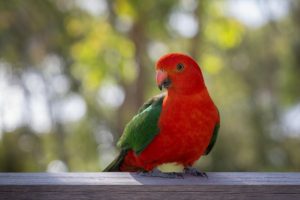 After the noise of lorikeets and cockatoos, king parrots offer a peaceful alternative. These large, stunning parrots visit quietly, feed patiently, and often become the most trusted backyard visitors for those willing to wait.
Backyard Behaviour:
-
Patient feeders: Wait their turn, rarely aggressive
-
Seasonal visitors: More common in gardens during cooler months
-
Pair bonds: Usually visit as male-female pairs
-
Gradual trust: Can become remarkably trusting over time
What They’re Doing in Your Garden:
King parrots are primarily seed and fruit eaters. Unlike lorikeets, they have strong beaks for cracking seeds. Unlike cockatoos, they rarely damage property. They’re often the “polite guests” at mixed feeding stations.
Quick Identification Tips:
-
Size: 43-50cm (substantial but slender)
-
Male: Vivid red head and chest with green wings
-
Female: Green head and chest with red belly
-
Call: Soft, melodic whistles (nothing like cockatoo screams)
-
Behaviour: Cautious but patient at feeders
Backyard Tip: Platform feeders with sunflower seeds and peanuts work best. Place feeders near tree cover so they can retreat quickly if threatened.
Discover more about these gentle visitors in our King Parrot Guide.
🔵 Rosella: The Quiet Forager
The Bird You Might Miss
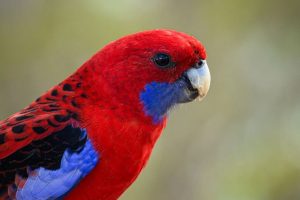
While lorikeets and cockatoos demand attention, rosellas often visit quietly at dawn or dusk. Their stunning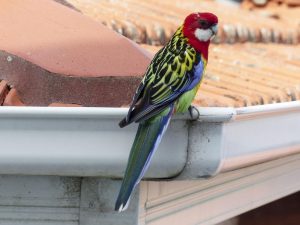 crimson and blue plumage contrasts with their shy behaviour, making them a special discovery for observant gardeners.
Backyard Behaviour:
-
Ground feeders: Prefer foraging on lawns
-
Dusk specialists: Often most active in low light
-
Quiet communicators: Soft chirps rather than loud calls
-
Shy approach: Quickly retreat if approached
What They’re Doing in Your Garden:
Rosellas are searching for small seeds and insects on the ground. They’re particularly fond of lawn seeds and fallen seeds from bird feeders. Their ground-feeding habit makes them less obvious than tree-feeding parrots.
Quick Identification Tips:
-
Size: 30-38cm (smaller than king parrots)
-
Crimson Rosella: Deep red with blue cheek patches
-
Eastern Rosella: Mixed red, yellow, green with white cheeks
-
Call: Pleasant chirps and melodic trills
-
Behaviour: Ground-focused, quick to fly
 Backyard Tip: Leave some areas of lawn unmown to encourage natural seed production. Scatter seed on open ground rather than using elevated feeders.
Identify and attract different species in our Rosella Guide.
📊 Quick Comparison: Know Your Backyard Parrots
| Feature | Rainbow Lorikeet | Sulphur-Crested Cockatoo | King Parrot | Rosella |
|---|---|---|---|---|
| Volume Level | Loud (screeching) | Very loud (screaming) | Quiet (whistling) | Quiet (chirping) |
| Feeder Behaviour | Aggressively dominant | Pushy but intelligent | Patient, polite | Ground-feeding |
| Colour Clues | Rainbow colours | White with yellow crest | Red/green (male) | Red/blue patterns |
| Best Viewing Time | Morning & evening | Dawn (for screaming!) | All day, cooler months | Dawn & dusk |
| Common Frustration | Feeder domination | Property damage | Shyness | Hard to spot |
| Human Interaction | Will hand-feed | Forms strong bonds | Gradually trusting | Usually shy |
Key Insight: Despite their differences in size, colour, and behaviour, all four species share common parrot traits: intelligence, complex social structures, strong beaks, and zygodactyl feet (two toes forward, two back).
🎯 Bringing It All Together: They’re All Parrots!
What Makes Them Parrots:
-
Hook-billed: All have curved beaks for cracking and manipulating
-
Zygodactyl feet: Perfect for climbing and holding food
-
Intelligent: Problem-solving abilities exceed most birds
-
Social: Complex communication and flock structures
-
Long-lived: Potential for decades of backyard visits
Your Backyard as Parrot Habitat:
Each species uses your garden differently:
-
Lorikeets: Nectar sources, flowering trees
-
Cockatoos: Roosting trees, chewing materials
-
King Parrots: Seed sources, safe perches
-
Rosellas: Ground foraging areas, shelter
Ethical Interaction Guidelines:
-
Feed appropriately: Different diets require different foods
-
Provide water: Clean bird baths help all species
-
Plant natives: Natural food sources beat feeding dependence
-
Accept natural behaviours: Screaming, chewing, and dominance are natural
When You See Parrots Now:
Instead of just “birds in the garden,” you’ll recognise:
-
The hyper-social lorikeet pollinating your flowers
-
The intelligent cockatoo solving backyard puzzles
-
The gentle king parrot waiting patiently for seeds
-
The shy rosella foraging quietly at ground level
Each represents a different survival strategy within the parrot family, adapted to Australia’s unique environments and now to our suburban landscapes.
🔗 Continue Your Parrot Education
This introduction covers the basics, but each species has fascinating depth. For complete guides to each parrot’s behaviour, diet, breeding habits, and interaction tips:
Start with our comprehensive comparison: Australian Parrots Hub
Then explore individual species guides:
Remember:
These four parrots aren’t just random visitors – they’re intelligent, complex wild animals adapting to life alongside humans. By understanding their natural behaviours and needs, we can enjoy their presence while supporting their wellbeing in our shared spaces.
Whether you’re dealing with lorikeet feeder dominance, cockatoo property damage, or simply want to attract more king parrots, knowledge is your best tool for harmonious coexistence with Australia’s incredible backyard parrots.